In 1824, the United States was approaching its national jubilee—50 years of independence. President James Monroe, looking to create a wave of patriotism and celebration, invited the last surviving General of the American Revolutionary War, an American hero and icon, to take a grand tour of the country revitalizing the “spirit of 1776.” That American hero was…a French aristocrat with a painfully long name of Marie-Joseph Paul Yves Roch Gilbert du Motier de La Fayette, the Marquis de Lafayette.

I won’t go into General Lafayette’s exploits, heroism, and leadership during his time in the Continental Army, but the young man was impressive and quickly became an adopted countryman.

However, we will talk about his American tour, particularly his stop in Fredericksburg.
Lafayette arrived in New York on August 15, 1824, after setting sail on a merchant packet Cadmus from Le Havre with much disapproval from Louis XVIII, the King of France. But royal condemnation from Louis XVI (Louis XVIII’s elder brother) hadn’t stopped him from setting sail for America in 1777, and it didn’t stop him in 1824.
Lafayette arrived in Fredericksburg on the evening of November 20th. He was first received at the parade grounds by two companies of Riflemen, the Washington Guards, and the whole Marine Band from Washington. Then they all commenced in a long column toward town, gaining excited townspeople on horses as they continued down Hanover Street toward Caroline. (Merchant, 1824) (Levasseur, 1829)

The procession made it to the Town Hall, which was festooned with evergreens and flowers. There, it was met by a battalion of little boys called Lafayette Cadets, dressed in sharp white uniforms with red trim. After a quick welcome speech from the mayor, the general was led into the Hall, where he was greeted by a group of garlanded young girls singing his praises.
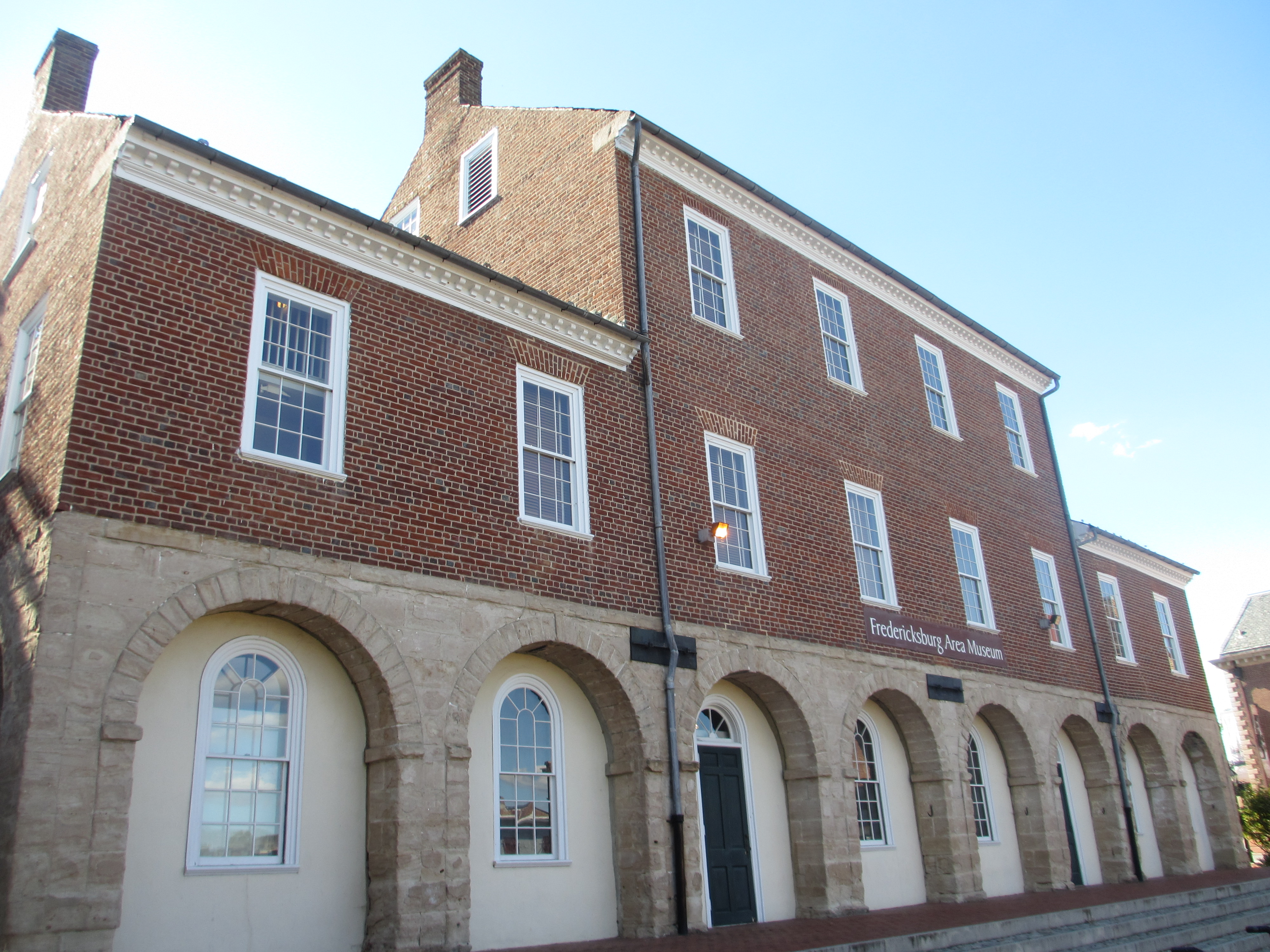
The general was then whisked off to his accommodations provided by Mr. James Ross to enjoy refreshments and a “handsome” dinner. At nine o’clock, Lafayette, the Mayor, and Colonel Mercer were taken to the Farmer’s Hotel (west corner of Caroline and Hanover Streets) to partake in a grand welcome ball for a few hours until he retired, presumably exhausted from the day’s activities. (Merchant, 1824) (Crookshanks, 2018)
On Sunday, the general, his son, and Mr. La Vasseur visited the Freemasons at the Fredericksburg Lodge, No. 4. In addition to observing the solemn and profound ceremonies, Lafayette was elected an honorary member in the Old Lodge Room. (Masonic Lodge No. 4, 2024)


The assemblage of Masonic Brethren, civil authorities, military officers, Lafayette, and company was escorted to St. George’s Episcopal Church to enjoy an excellent discourse delivered by the Reverend Edward C. McGuire, also a Mason.

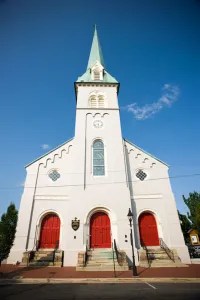
The general then spent the evening in the company of Washington relatives at Captain Robert Lewis’s, then retired to his lodging early at 9 o’clock. As Monday morning arrived, Lafayette was paraded to the town hall in a chariotee drawn by four white horses, where he was greeted by a crowd of ladies who occupied his time until he was led away for a sumptuous dinner at Mr. Gray’s Tavern. After a few hours of delicious food, songs, and speeches, the general was loaded into a carriage for the final time as he continued his journey to Washington. (Dovetail Cultural Resource Group, 2006)

Lafayette’s time in Fredericksburg might have been short this trip, but it gave the city a last chance to thank and honor a valued friend who had been a champion for America and helped fight for this country’s freedom.

The city will again celebrate General Lafayette’s visit with a Commemoration Weekend on November 23rd and 24th. The weekend will open with a recreation of Lafayette’s arrival at the Old Town Hall, including period music and costumed participants. A reception line with the General will follow it. There will also be a Lafayette Ball on Saturday night, where participants can dress in their finest Regency garb and dance the night away (until 9 p.m.) with the General and President Monroe.
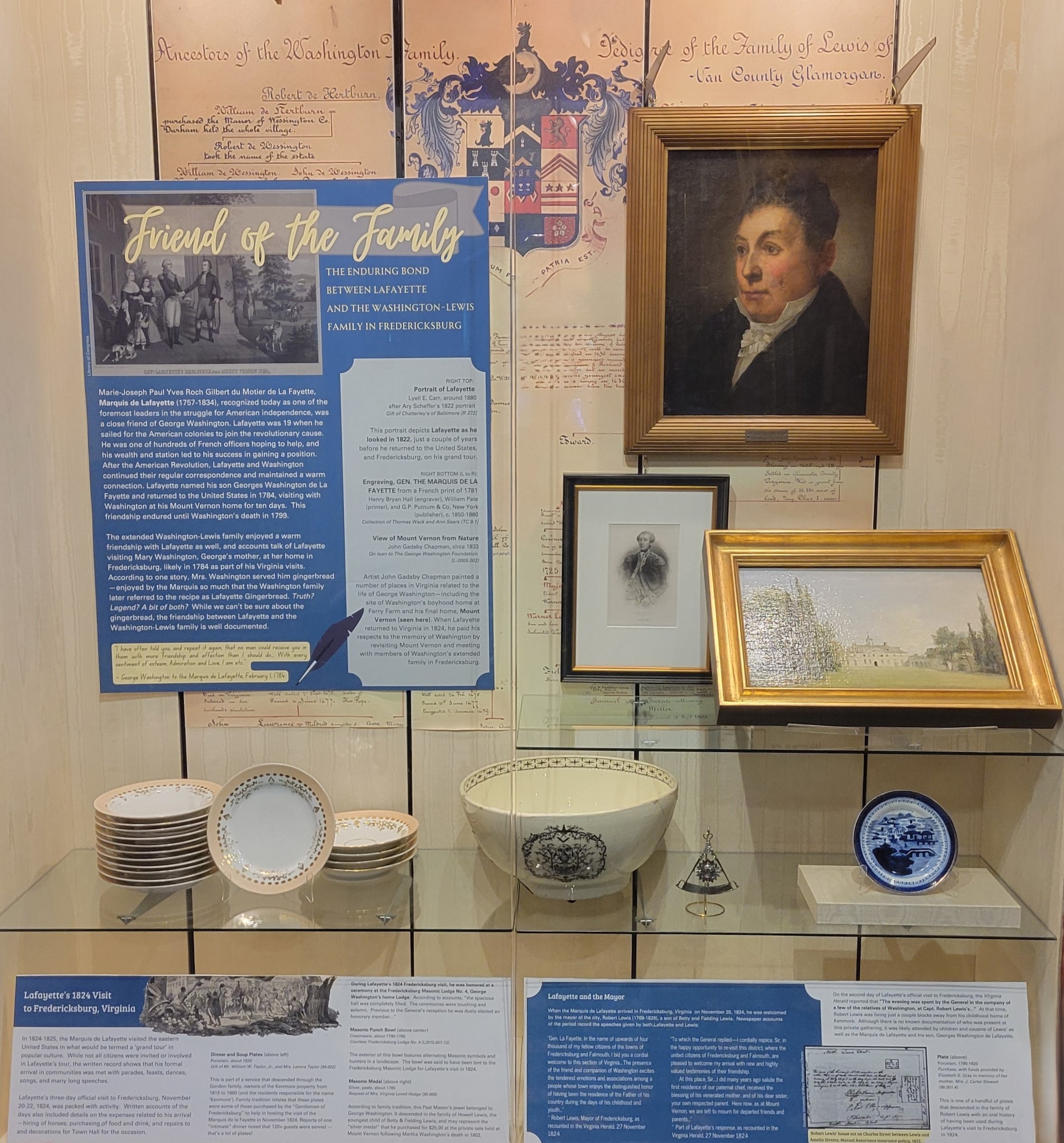
Additional Saturday events include tours of the historic Masonic Lodge No. 4. Learn about the history of George Washington’s Mother Lodge and the fraternity’s importance to the general and see rare artifacts like the original punch bowl used during Lafayette’s visit. For more information and tour hours, visit the Masonic Lodge No. 4 website.
Sunday will start with recreating Lafayette’s Masonic welcome, with historical speeches and a unique ceremony. There will be additional Lodge tours from 1 to 4 p.m. At noon, a historic church service at St. George’s Episcopal Church will be reminiscent of that performed by Rev Edward McGuire. Lastly, back at the Masonic Lodge from 2 to 3 p.m., historian Chris Ruli will give a lecture discussing his forthcoming book, “Brother Lafayette,” which examines the Marquis’ connection to the ancient fraternity.
Finally, if you have some extra time on the weekend, stop by the Fredericksburg Area Museum and see their exhibit “Lafayette’s World: Revolutionary Ideals and the Limits of Freedom,” which explores Lafayette’s ideas on freedom, democracy, and abolitionism.
If you can’t attend the weekend events but still want to see exclusive artifacts related to Lafayette’s visit, including the extraordinary punch bowl of Masonic Lodge No. 4, stop by the Kenmore Visitor’s Center, check out our new exhibit, take a tour of the house and learn all about Fielding and Betty Lewis.
Heather Baldus
Collections Manager
 Lives & Legacies