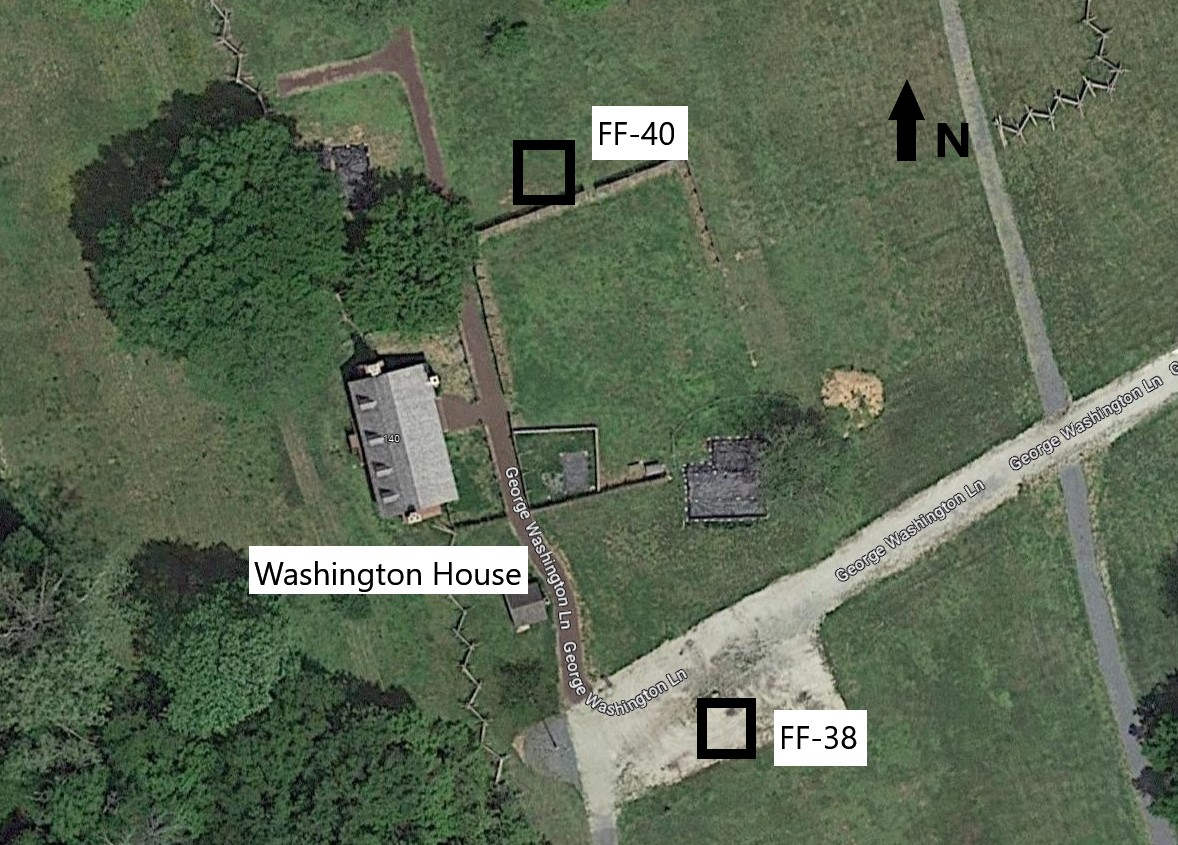
It’s that time again! As we welcome Fall and the beautiful cool weather it brings, let’s take a look back at our Summer 2023 dig season here at Ferry Farm, George Washington’s Boyhood Home. This year’s dig actually involved excavating two separate areas, designated FF-38 and FF-40, within the historic area.
Project FF-38
The FF-38 area contained a large, dark, soil stain that was discovered by accident during the monitoring of a utility trench in 2016. Only a portion of this feature was visible at that time as it continued beneath the south wall of the trench. We had clues as to the approximate date of this partially-exposed feature, but we still needed to fully uncover the entire feature to establish its total dimensions and determine its age, function, and how it relates to the surrounding landscape.
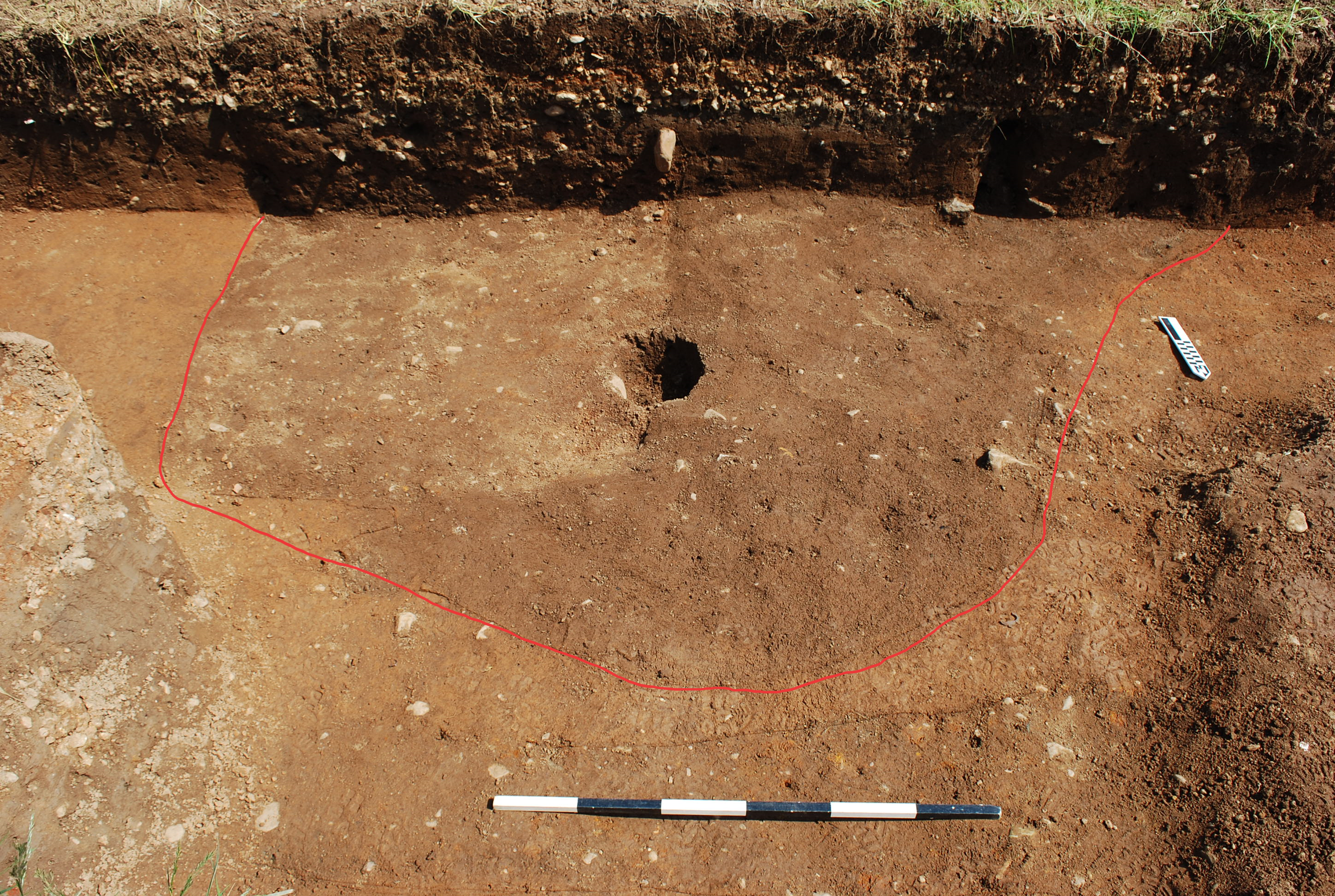
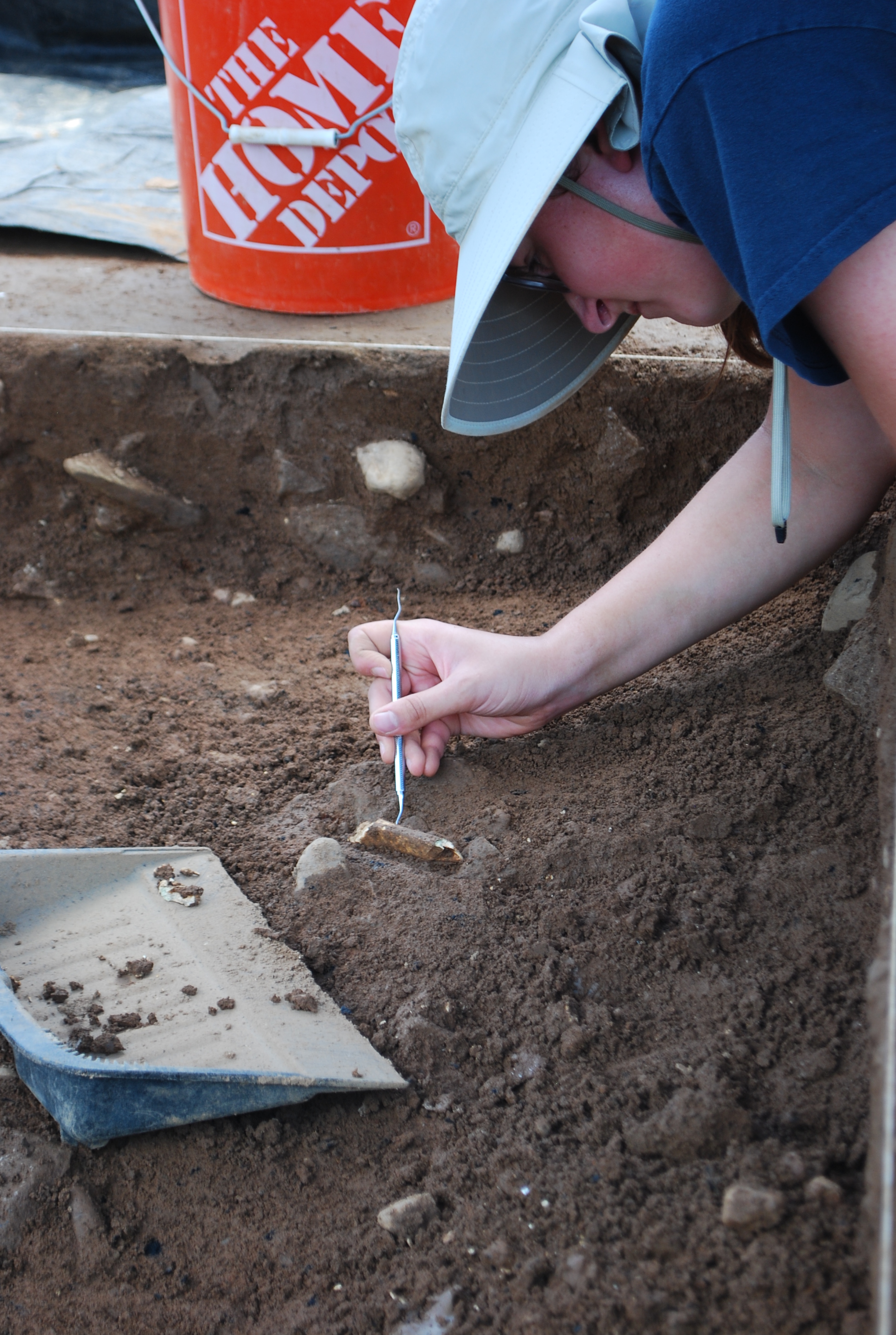
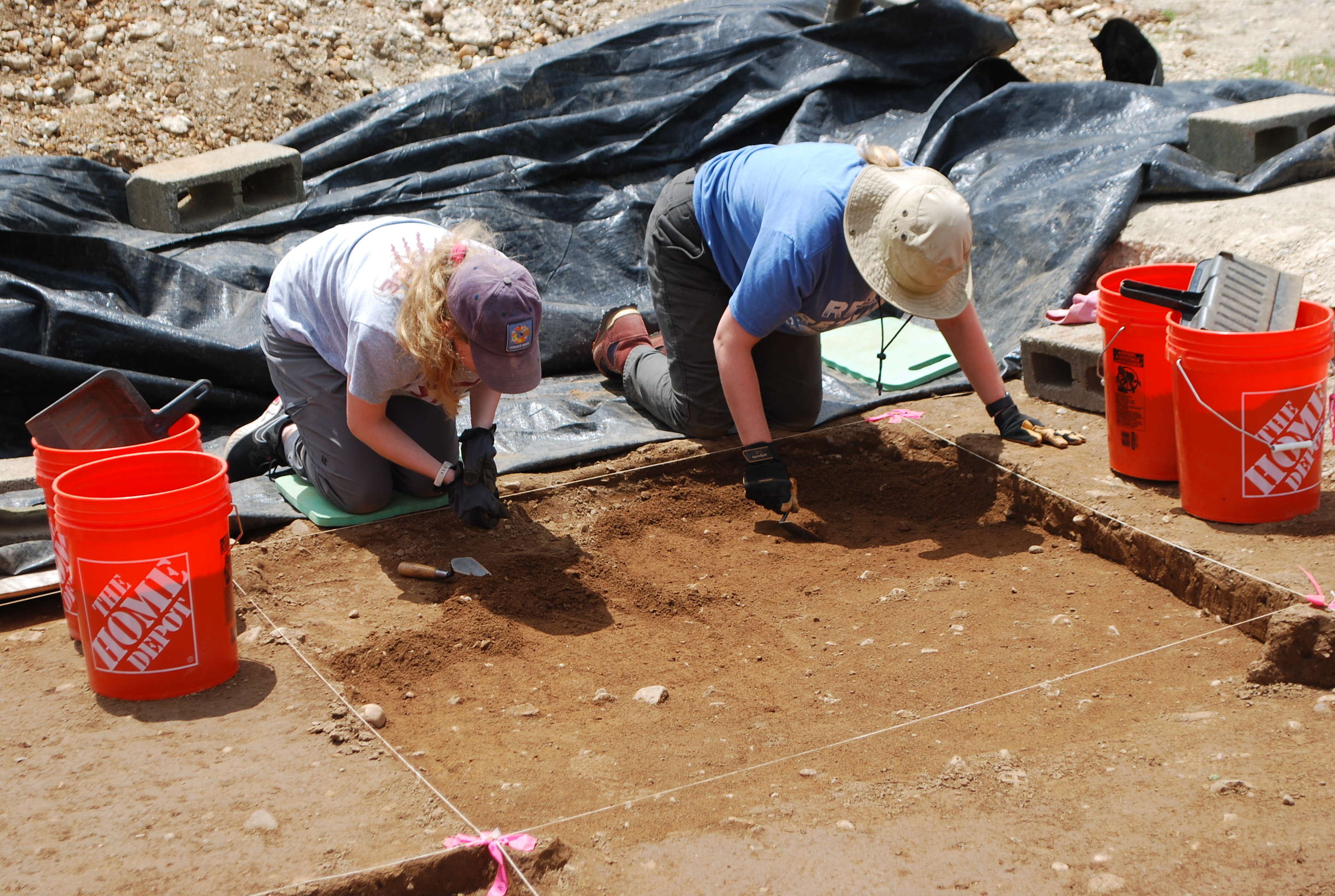
Our excavation began by the machine removal of two modern layers of gravel that overlay a thick 19th-century layer of plowed soil. The excavation area measured approximately 16 ft. by 20 ft. Our crew of archaeologists then slowly excavated down through the plowed layer until we could identify the boundaries of Feature 321. Fully uncovered, the exciting discoveries began.
First and foremost, we discovered the feature was much bigger than originally thought! What initially appeared in 2016 to be a 5’x7’ roundish feature turned out to be the northern tip of a large rectangle measuring 10’ by 16’. The size and shape alone of the feature shifted our interpretation from a small pit to something larger.
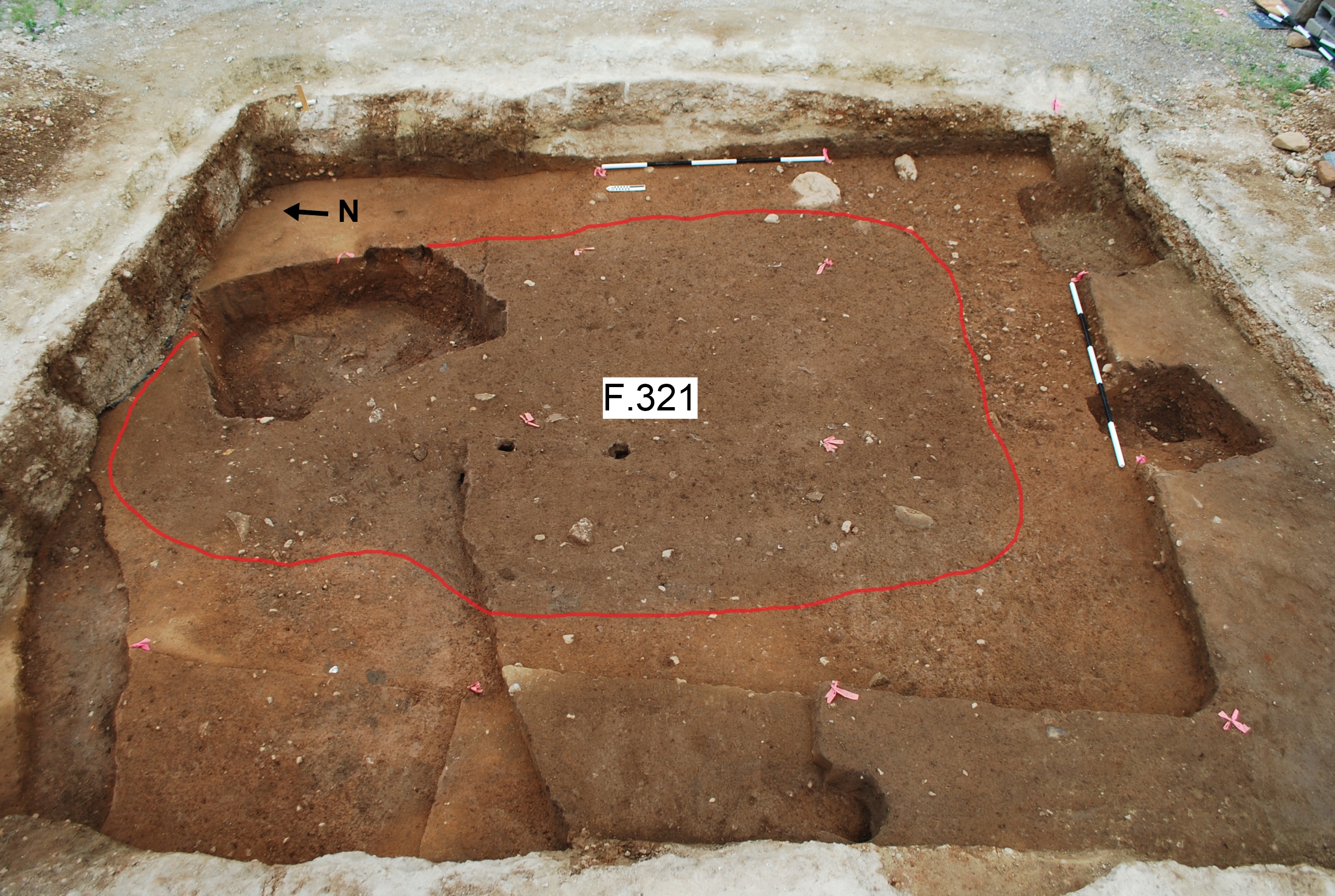
Feature 321 was divided into four sections and our crew excavated both southwest and northeast quadrants. This excavation approach allowed us to determine that the feature was roughly 1’ deep at the center, with gently sloping sides, and filled with successive layers of soil and ash-filled deposits. These soil layers provided us with an awesome mix of artifacts which were used to nail down the feature’s end date to the middle of the 18th century. But establishing a date is only part of the process: artifacts can further help us identify the function of the feature as well.
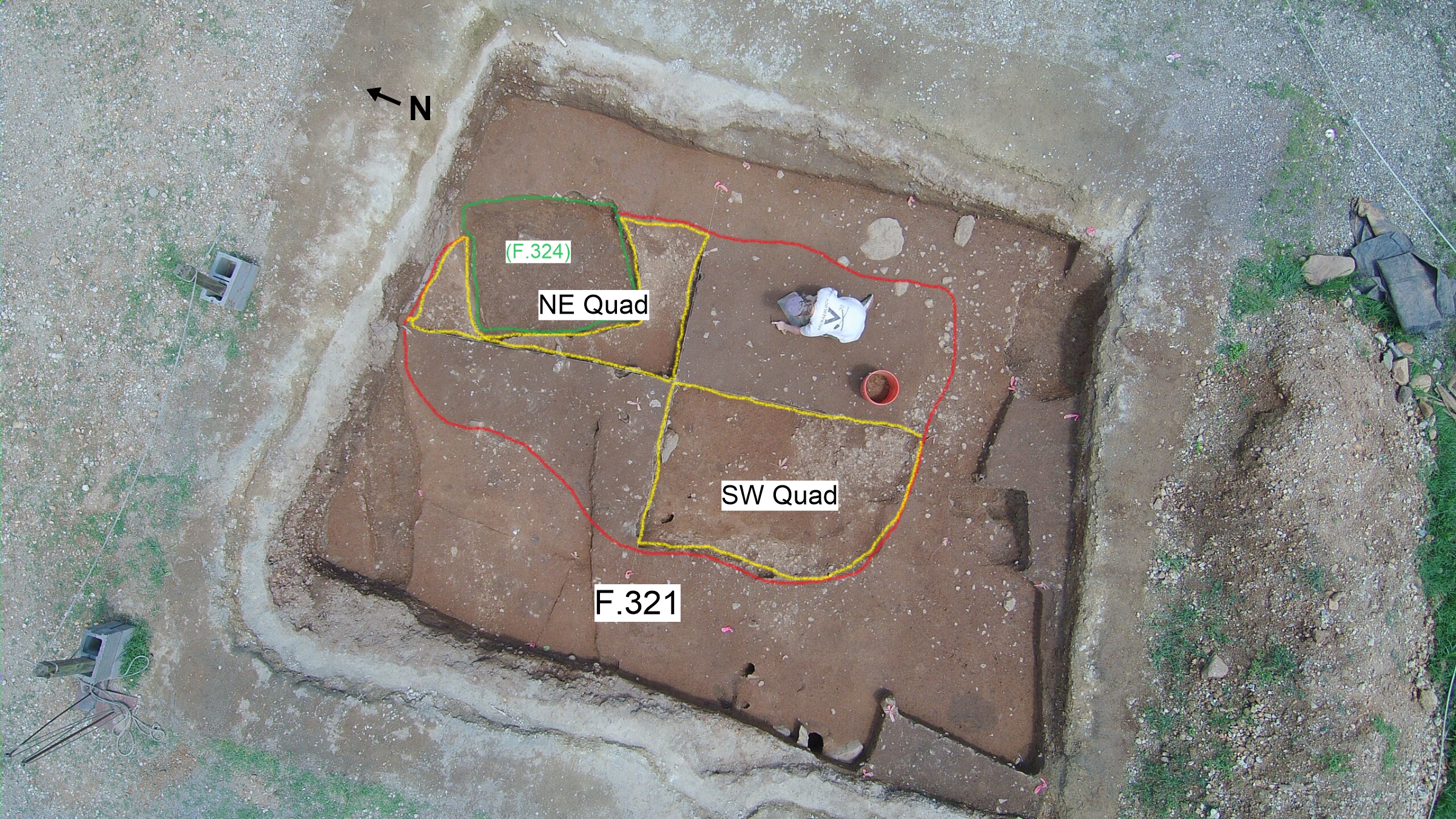
That being said, we are still unsure of what this feature actually is. Here is what we know so far. There is no hearth of chimney remains. Lack of a fireplace suggests it wasn’t a domestic dwelling, but it could be another type of plantation outbuilding, such as a storage building, shed, or barn. The edges are almost vertical, and the floor is relatively flat. There is no silt so the pit was covered while it was open. It is too regular to be a quarry pit used to harvest clay as a building material.
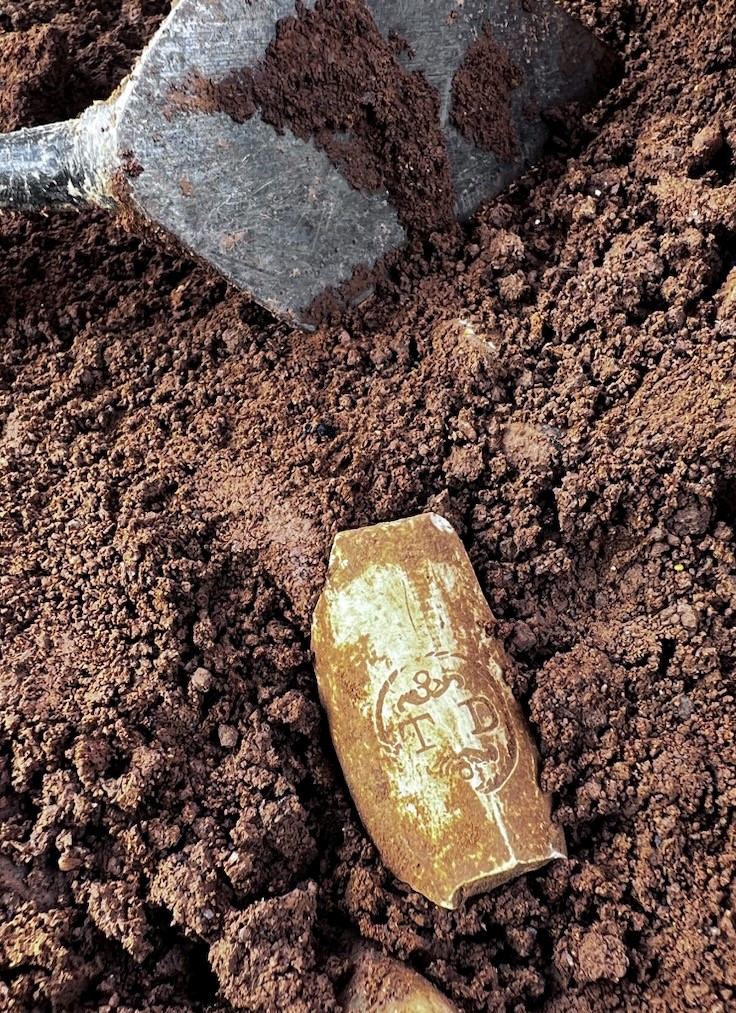
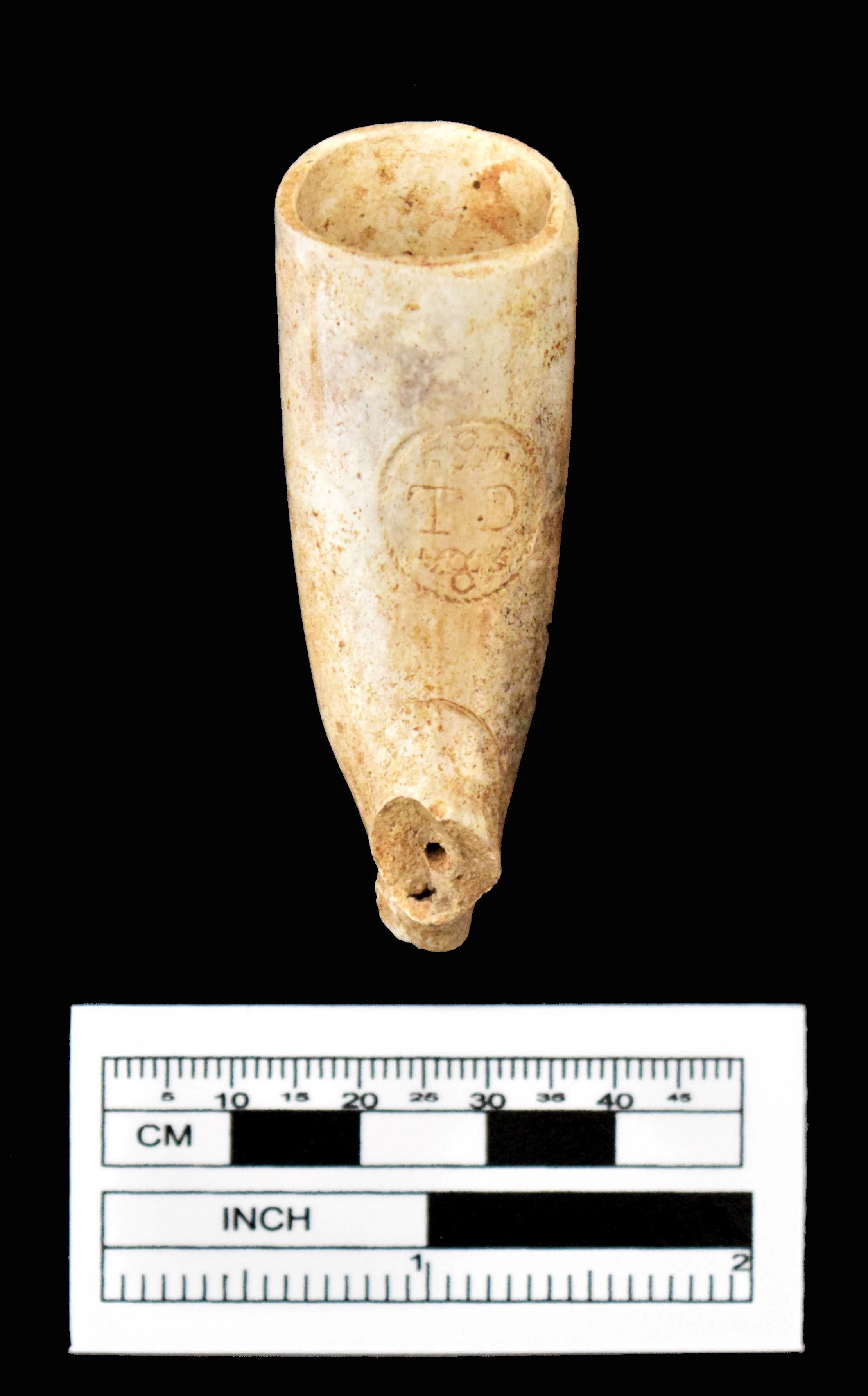
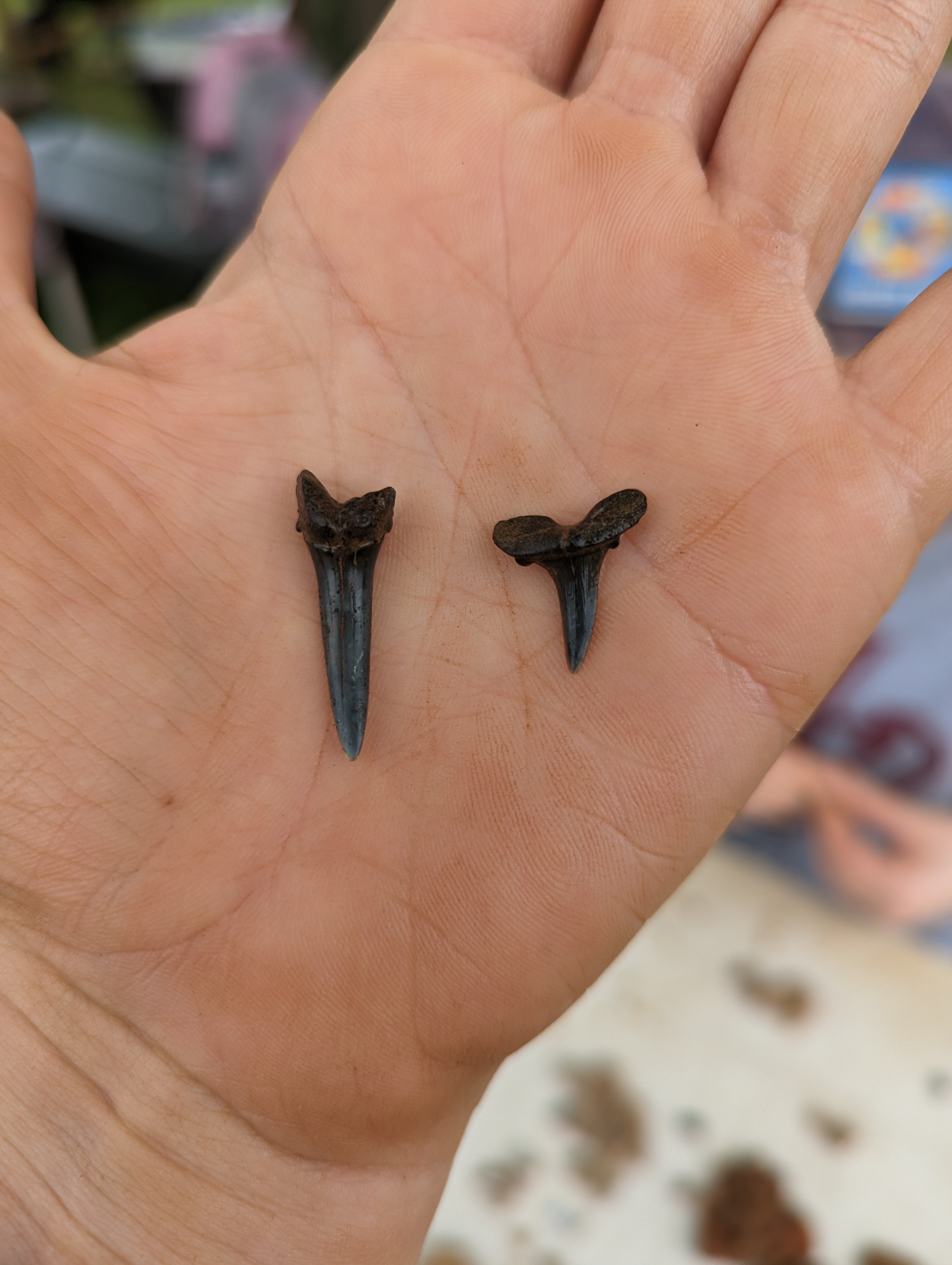
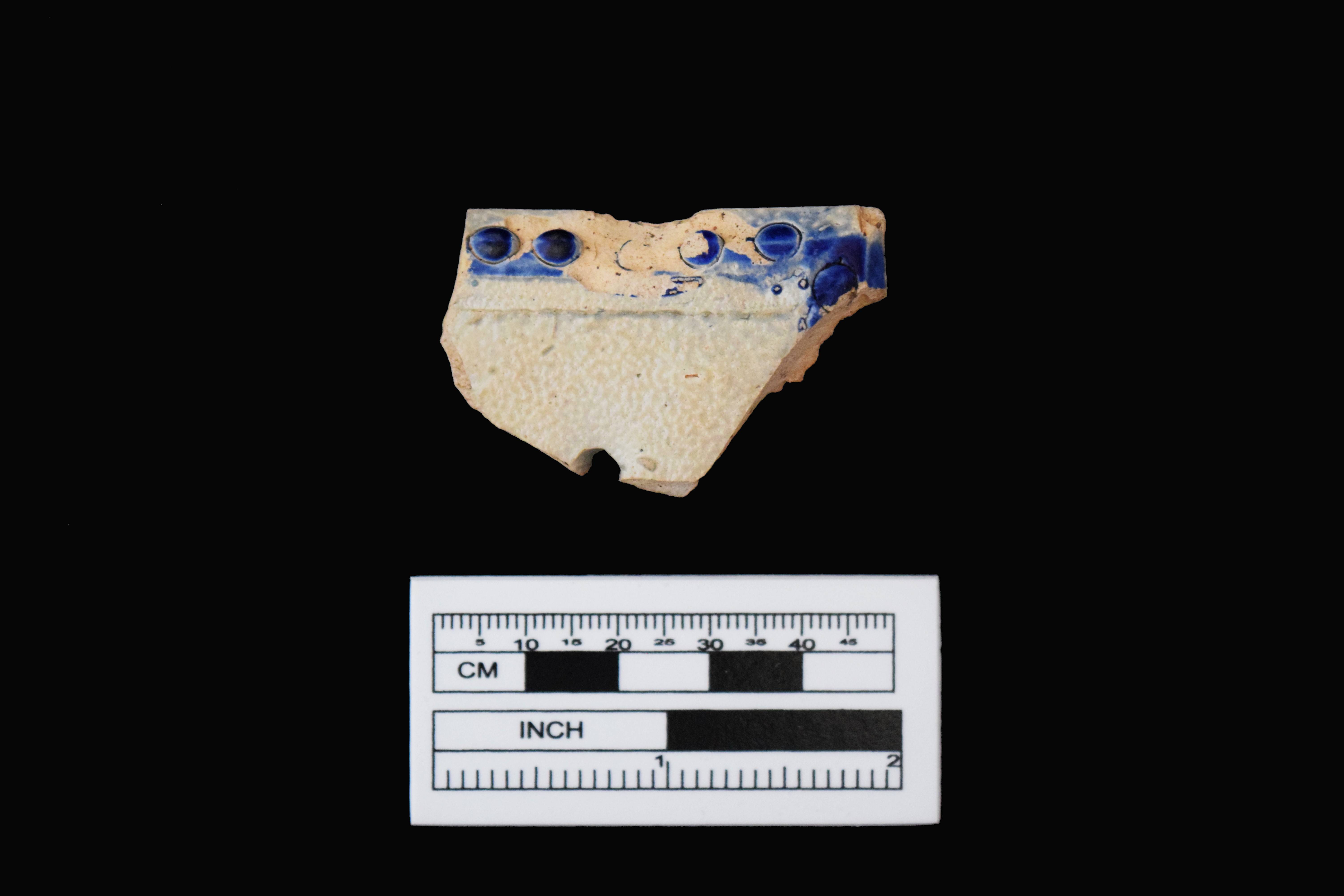
Even though we are still in the early days of analyzing the artifacts, that doesn’t mean we can’t talk about a few great things we found. This feature had a little bit of everything: personal items, food-related items, architectural debris, domestic items, etc. The crowning glory of the excavation (in our humble opinion) would have to be the complete pipe bowl that was stamped with a maker’s mark that featured the letters “TD.” Other exciting finds include a clipped Spanish coin, sherds to a Westerwald ink well, shark teeth, and prehistoric pottery, just to name a few. This feature also contained a layer of ash that preserved delicate artifacts such as bone, fish scales, and straight pins – items that often don’t survive in the archaeological record.

So what does this all mean? Well, this means that we will definitely be returning to the FF-38 site next season. While we have gathered a lot of information during this dig, there is still much left to find. Expanding our excavation beyond the limits of the feature and excavating one of the remaining two quadrants will help us interpret the feature’s function and how it relates to the 18th-century farm landscape of the Washington family.
FF-40
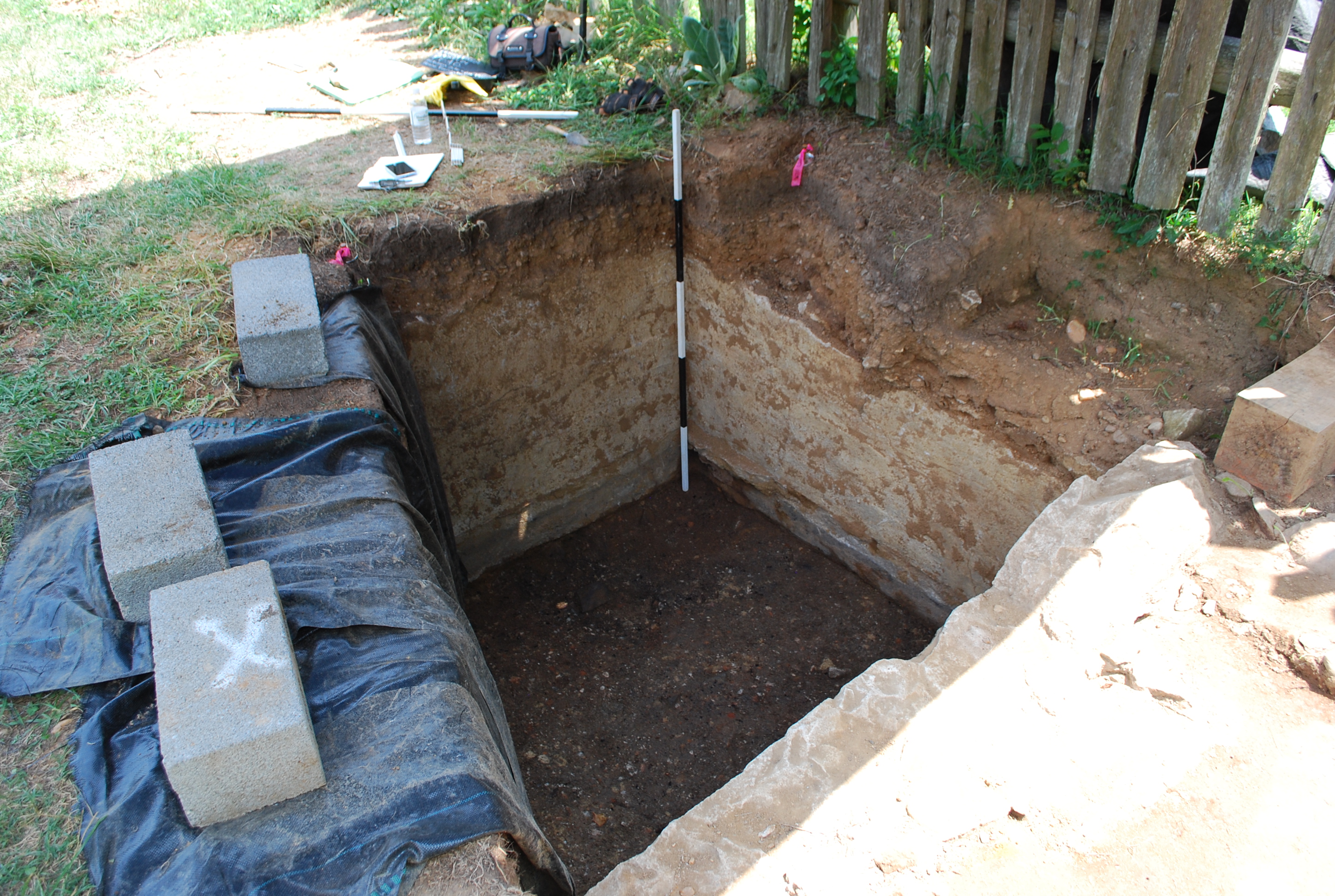
Wait, that’s not all for this year’s dig. Don’t forget that we had two excavation areas this year. Our second area was FF-40, which was the remains of an 18th century kitchen had experienced an intense fire. This kitchen was partially excavated in the 1990s, so this year’s excavation had more of an exploratory excavation designed to help us establish a game plan for future excavation. We knew the kitchen remains were below the foundations of two later farmhouses, and that the foundation walls of these farmhouses were still extant. Additionally, the interior of the foundations was filled with sand to protect the kitchen site. Our excavations confirmed the location of the farmhouse foundations and the existence of a protective layer of sand! Once our crew were able to get through this sandy fill, a quick clean of the kitchen fill uncovered artifacts that were absolutely toasty. Okay, toasty isn’t a technical term, but the artifacts showed evidence of a fire that burned at extremely high temperatures. This included a high number of architectural artifacts as well as charred ceramics and melted glass. Findings from this year will help guide the excavation in the future.
Phew, that was a lot! That sums up our 12-week dig season. We answered a lot of our initial questions and found many more questions to investigate. Archaeologists will be in the lab the rest of the year processing artifacts, researching our findings, planning next season’s dig, and enjoying the A/C. Stop by the lab in the Visitor’s Center and take a peek at what’s happening. See you all in the field next May!
Danielle Arens
GWF Archaeologist
 Lives & Legacies