Postcards were a staple of vacations. Collected and sent back to friends and family so they could be part of your adventures. Many of us can remember trying to pick up postcards on the first day of vacation to get them in the mail quickly so they would arrive back home before you.
Postcards were created in the mid-nineteenth century, and through the decades, they were mass-produced with popular scenic images and were inexpensive, so many people picked up postcards to document their vacations rather than taking pictures. Their popularity and collectability mean that boxes and boxes of old postcards can be found in antique stores and flea markets.
While postcards are amusing souvenirs and a source of nostalgia, they can also offer us important insights into the evolution of historic sites and cities. Postcards of Kenmore have helped us document the restoration of the house, the development of the property, and past interpretations, even providing documentation of collection items for which we may not have records.
For your enjoyment, I’ve selected some of my favorite postcards to showcase how they’ve documented the historical restoration and interpretation of Kenmore.
Exterior: Pre-Restoration
Kenmore has always been quite the showpiece, even when it was privately owned. One of the earliest postcards of Kenmore’s exterior is dated 1908, as indicated by the postmark. The Howard family owned the house until it was acquired by E.G. Heflin around 1914.

The postcard shows the house from the Washington Avenue side (west elevation) and provides a glimpse of the properties before any restoration work. The old kitchen can be seen on the north side of the house, while the exact date it was built is unknown; we know it was built in the late 1880s or early 1890s. It was torn down in 1929.
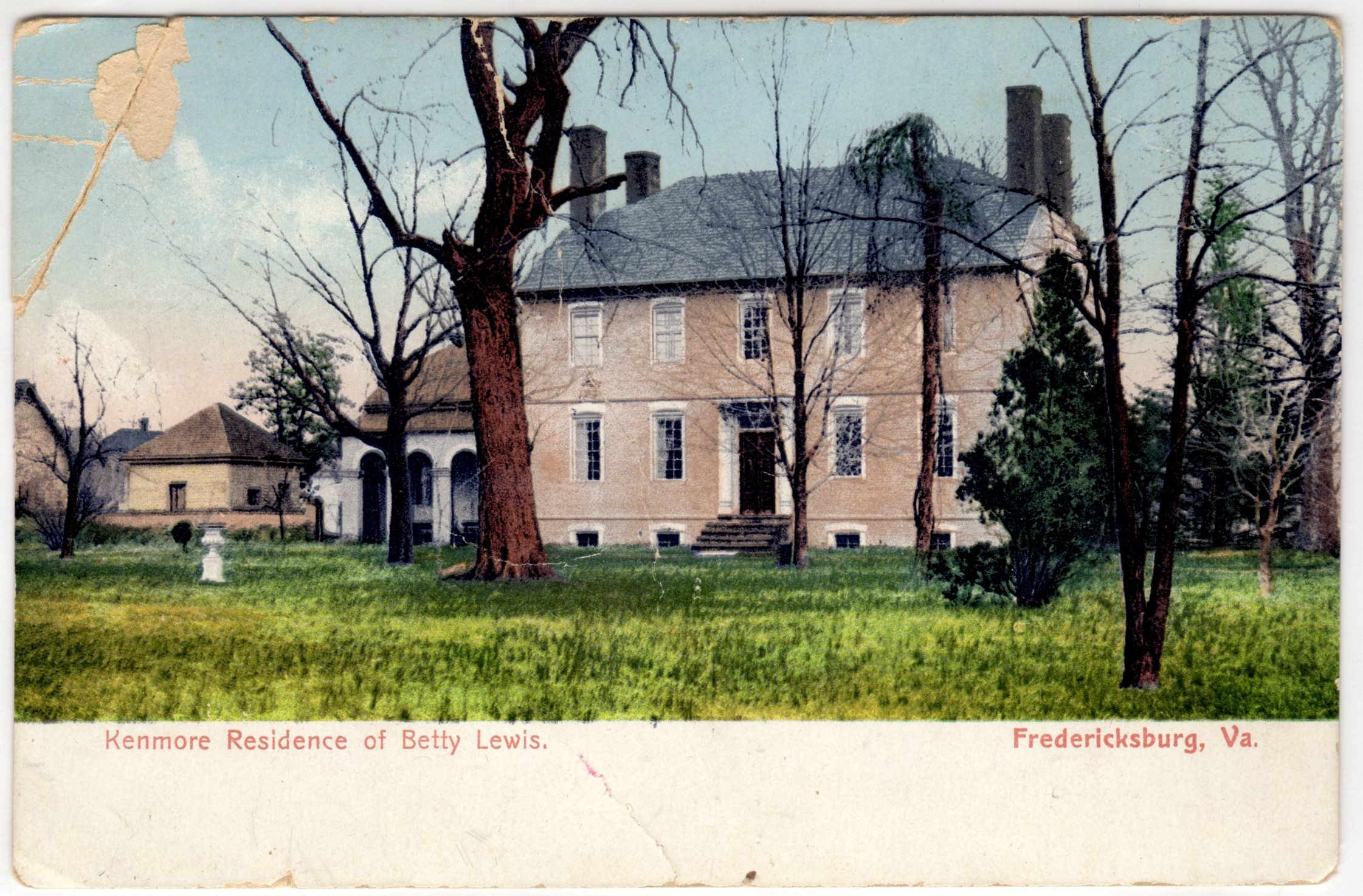
Additionally, the exterior brick has been painted, along with the lintel, which was removed in 1929. We can see the paintwork better in the second color postcard.
Interior
Entrance Hall
One of the earliest postcards we have of the entrance hall, around 1923. One of the most notable things is the plasterwork on the ceiling. If you see current pictures of the entrance, you will notice that this plasterwork no longer exists. The plasterwork was done by former resident William Key Howard, Jr., when he was restoring the original ceiling in the other rooms. In 1930, the Association decided to remove the plasterwork because it was not original to the Lewis family. Mr. Howard Jr. was not happy when he found out that the plasterwork had been destroyed and called it an act of vandalism.


Additionally, we can see next to the tall case clock a door that leads into the drawing room, which no longer exists. It was decided that this was not the original placement, and the door was moved directly across from the office door in 1930.
Chamber/NW room, first floor
While we currently interpret the NW room on the first floor as the chamber, the ladies referred to it as the Dining Room. We can see a round table, a sideboard, two chairs, and two portraits, plus a large silver tea urn. The postcard dates from the late 1930s because we know from our records that most of these pieces were donated in 1935. We still have all these objects in the collection, but the only things currently on display to the public are the round table in the dining room and the chairs in the drawing room. All other pieces are in storage.
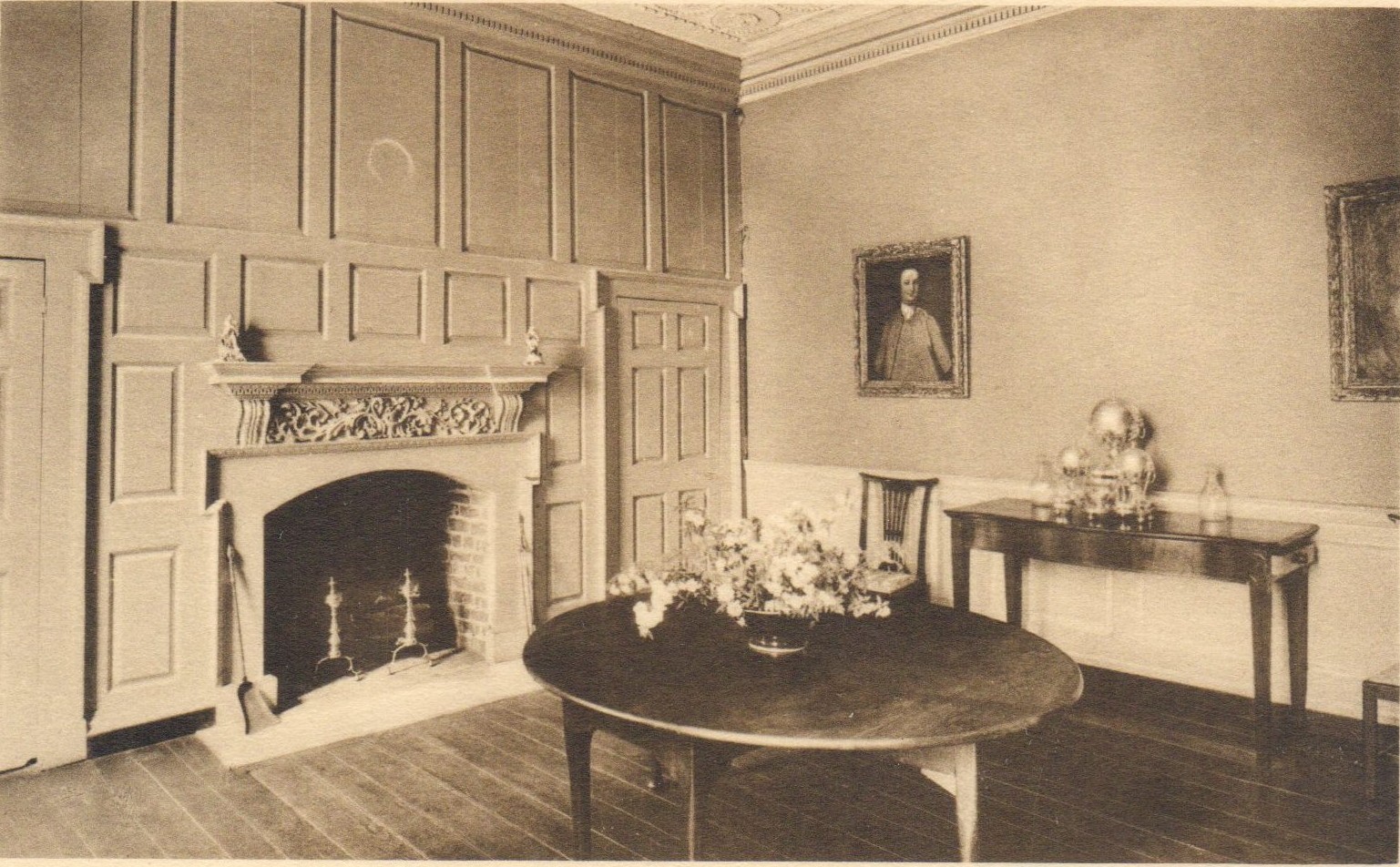
Dining Room/NE room, first floor
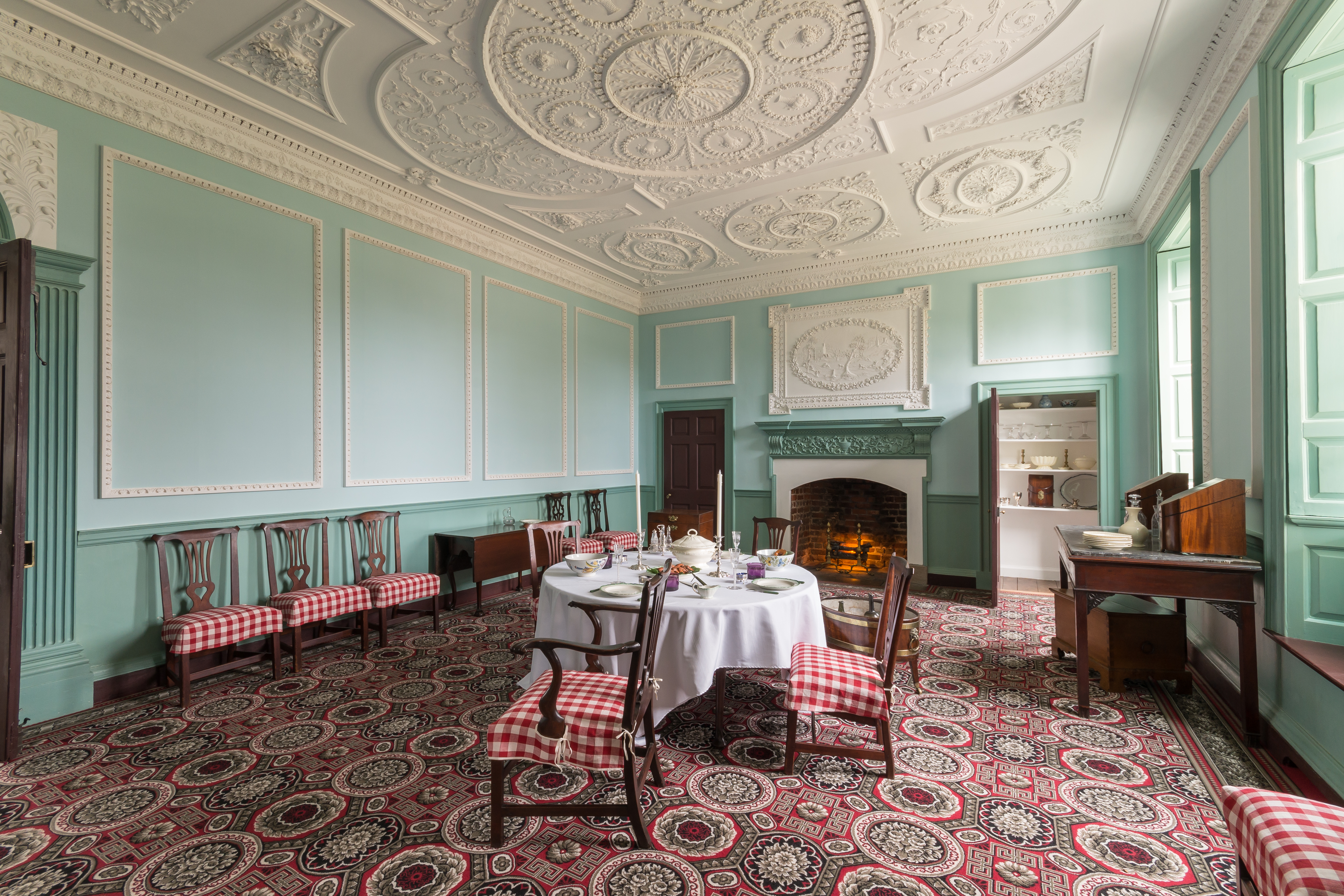
We currently refer to the NE room on the first floor as the dining room. It has undergone many changes, with Gothic arches added to the closets during the 19th century, and has been restored to its original shape. Not everything in the postcard is still in our collection, but you can see the square table still on display in the dining room, and Betty’s portrait is now in the drawing room.

Drawing Room/SE room, first floor
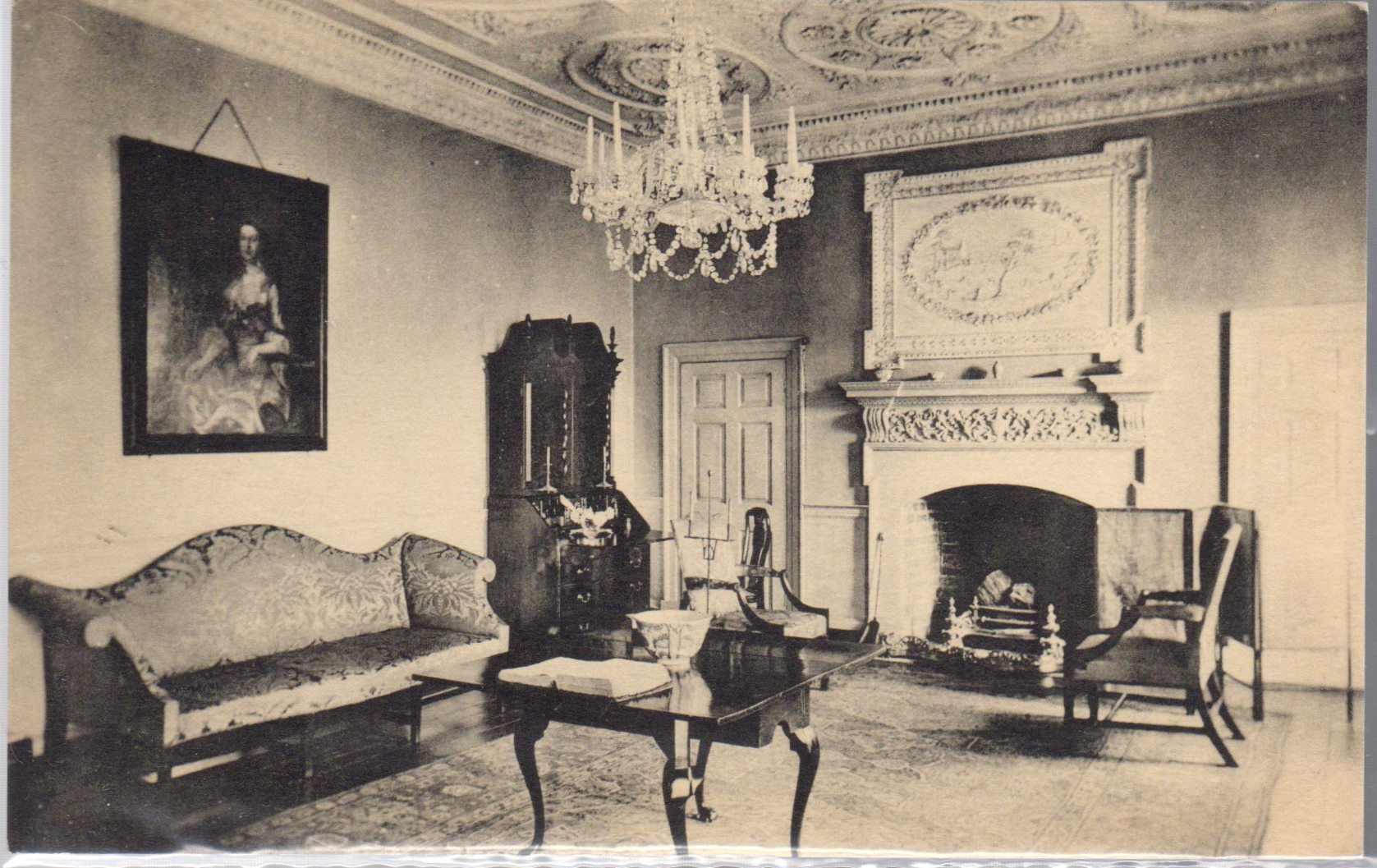
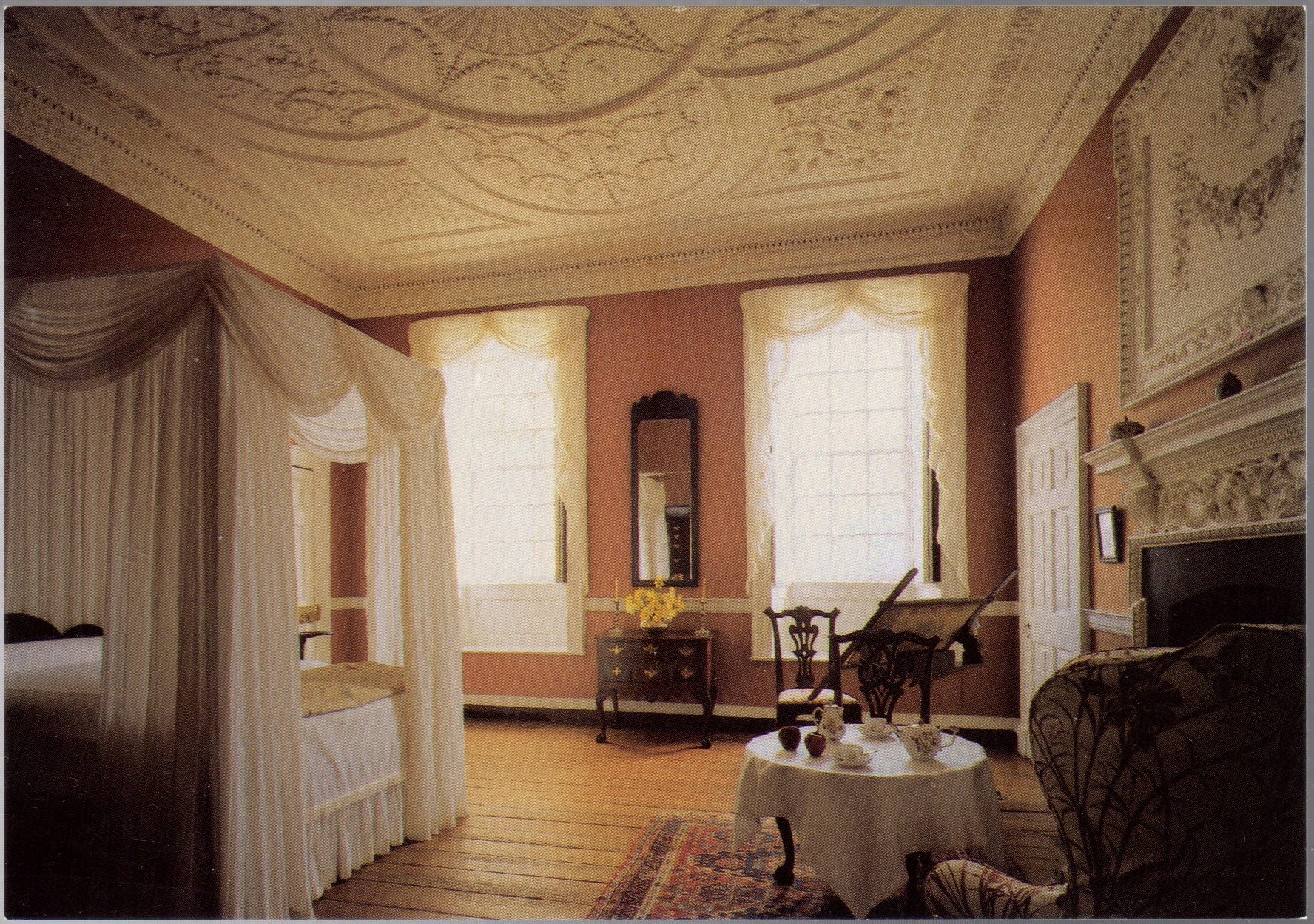
The drawing room was previously known as the library and also served as a chamber for a while in the 1980s. By the window, you can see Betty’s desk in the older postcard (c.1940s), which is still on display, but in the chamber. We still have the tea set on display where it was in the chamber, but it is currently in storage.


Office/SW room, first floor
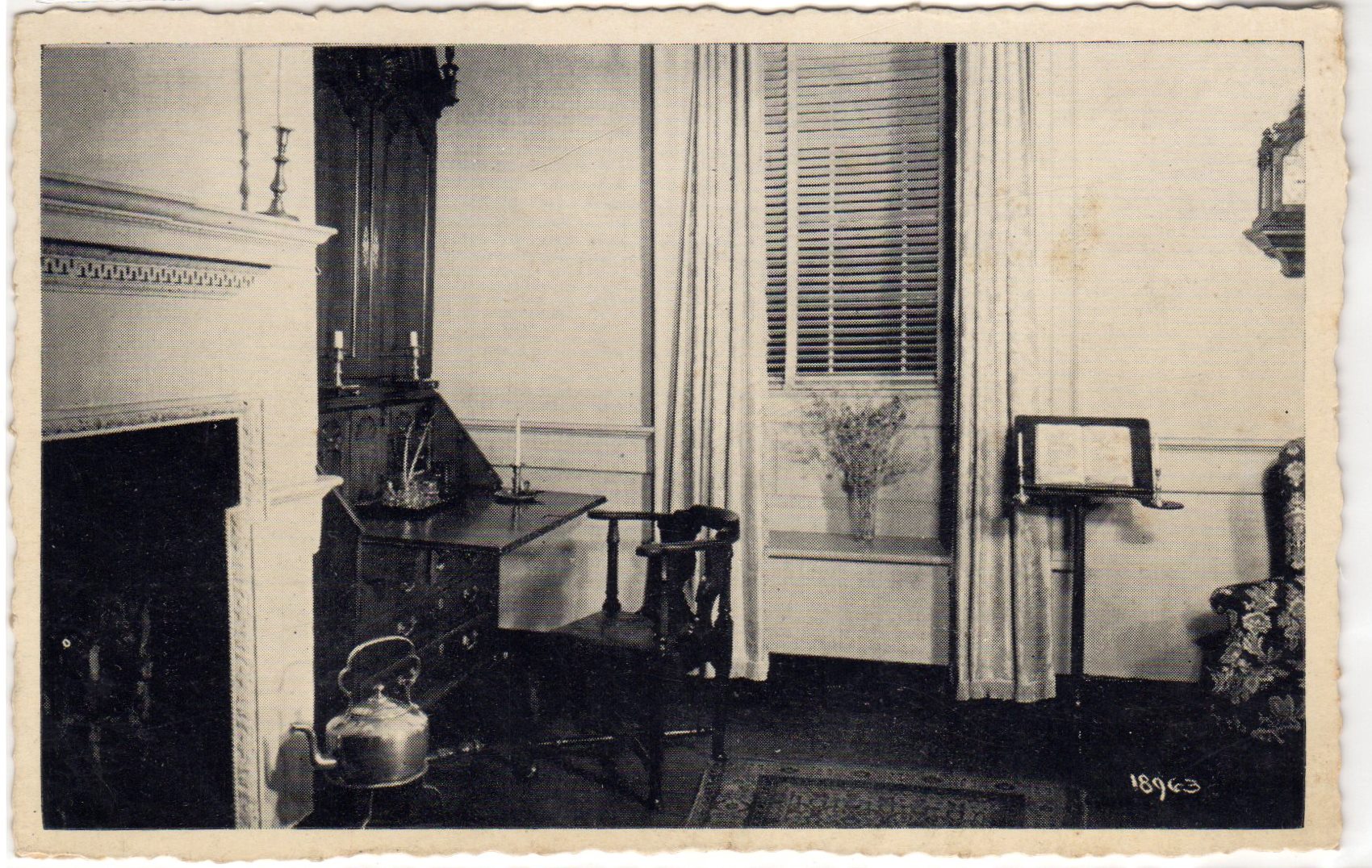
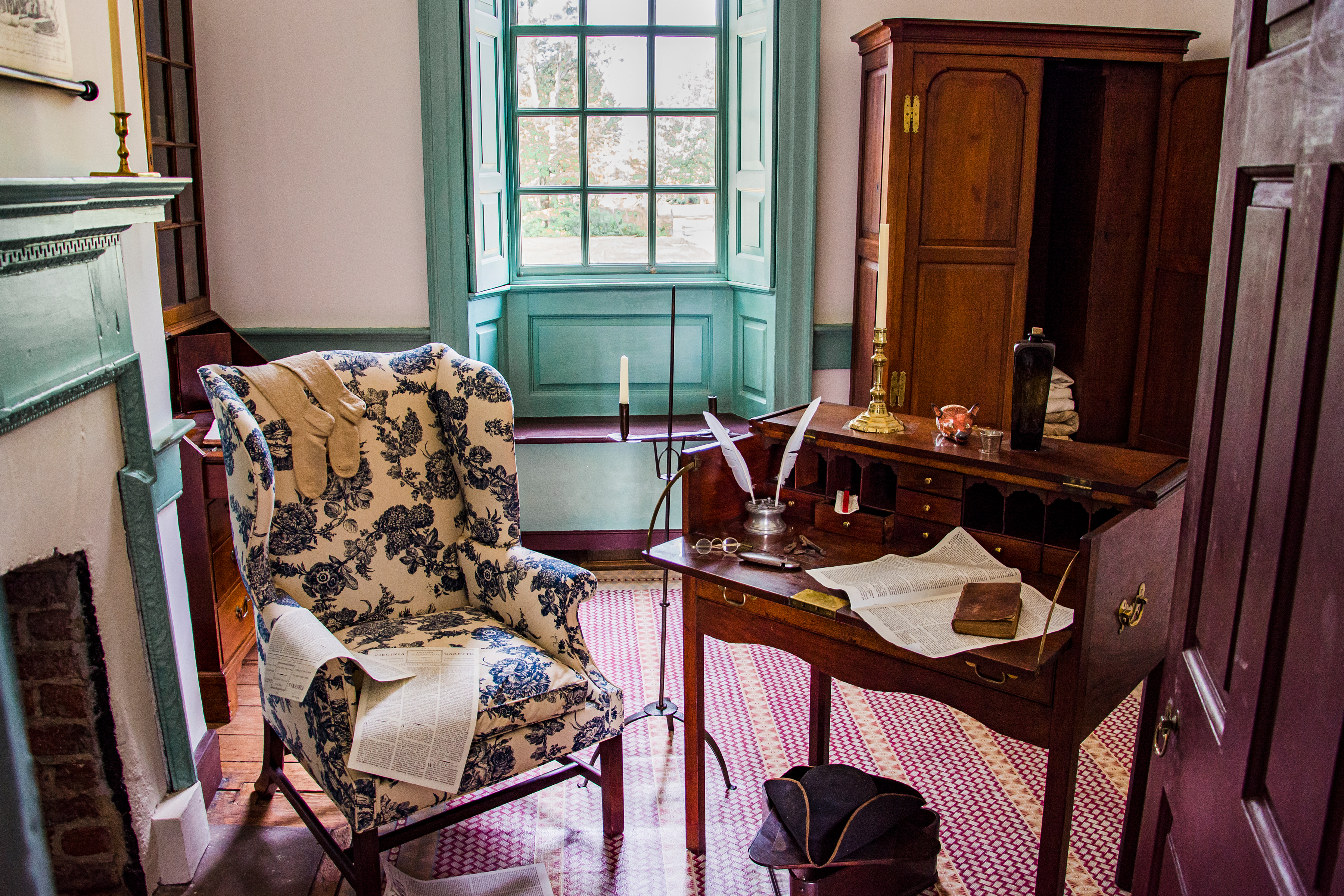
Fielding’s office has been displayed as a sitting room and a kids’ room. We don’t have many of the objects in the postcards still in the collection, except the corner chair, which now has a check seat, and the music stand, which is too fragile at the moment for display.
2nd floor
We currently do not offer tours of the upstairs area because we don’t put too much stress on our lovely plaster ceilings. The Kenmore Association interpreted the upstairs as individual bedrooms for the family, which is not the most historically accurate version.
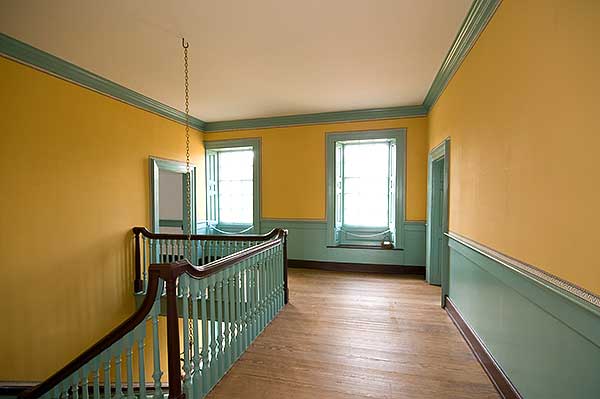
Hallway/ 2nd floor
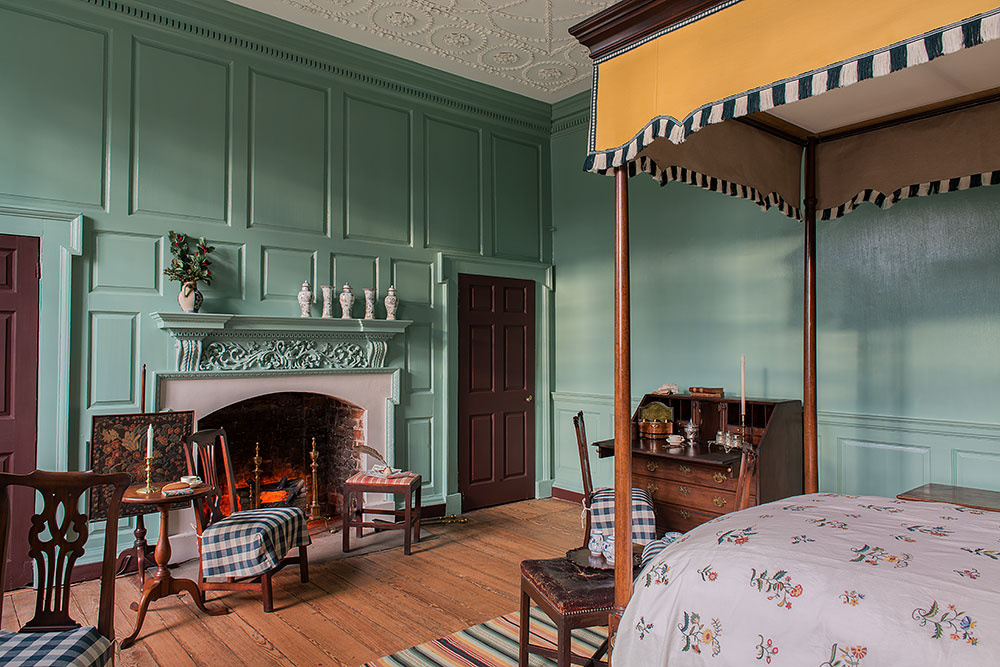
Besides the paint color, the hallways upstairs remain structurally the same. The ladies have Betty’s desk on display, with the Hammond quilt above. We still have the Hammond quilt; fortunately, we removed it from the frame, but it is a massive quilt and is not currently on display. However, it is in excellent condition. As for the tall case clock, chandelier, and curtains, they have been lost to history.

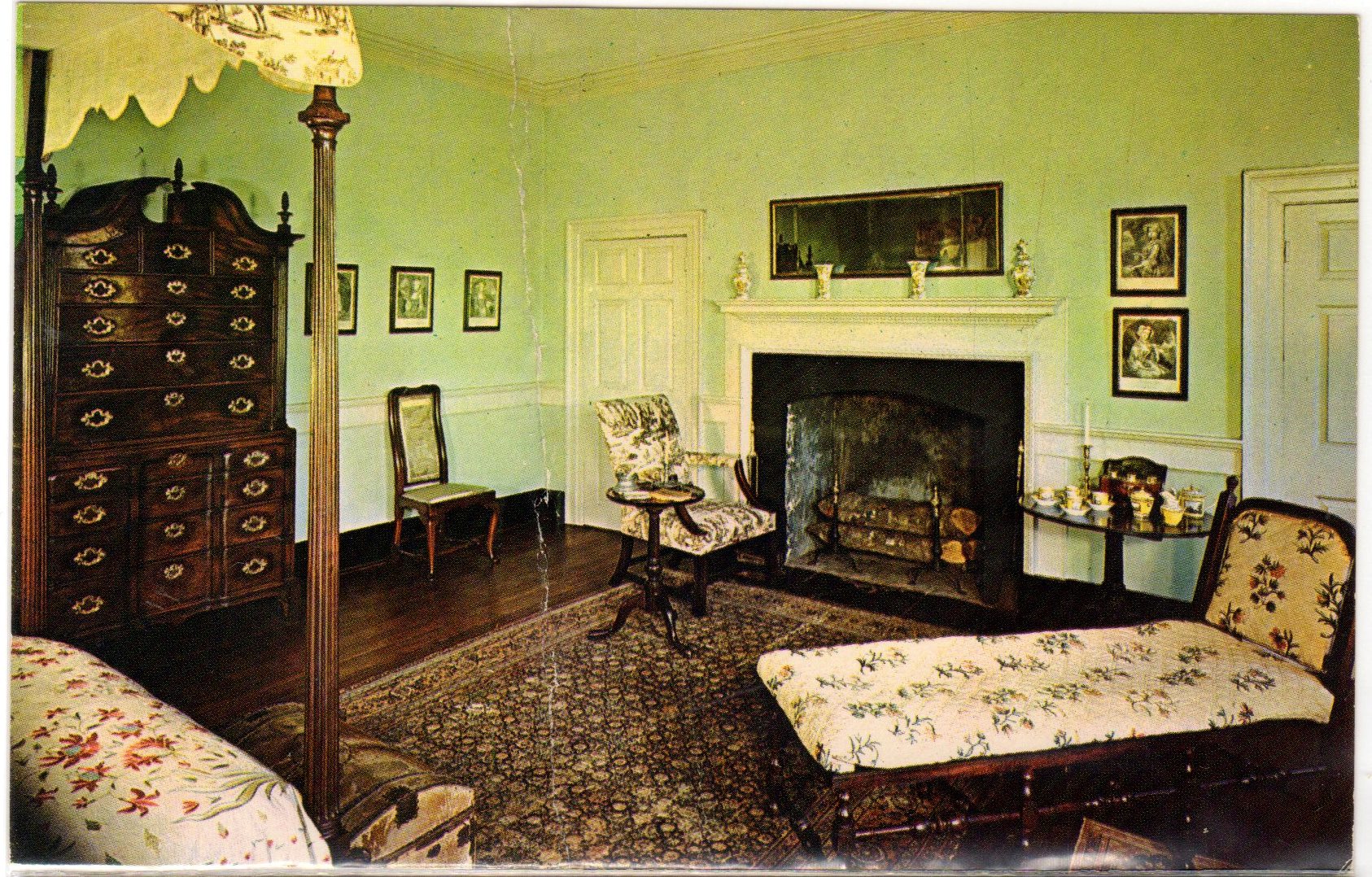
“Mary Washington Bedroom”/NE room/2nd floor
We have no evidence that Mary ever had a dedicated bedroom at Betty’s house, and it seems unlikely with the size of the Lewis family. We do still have some of the pieces in the collection. The tea box is currently on display in the chamber, and the yellow tea set has been displayed intermittently over the years. The two calendar prints hung on the wall are now downstairs in the drawing room. Lastly, the chaise lounge was loaned to the foundation by the Metropolitan Museum of Art in the 1930s (subsequently purchased in 1968) and is currently in storage, as there is no evidence that the Lewis family owned many northern furniture pieces.

“Guest Bedroom”/NW room/2nd floor
Much like “Mary’s bedroom,” it is very unlikely that the Lewis family had a “guest room,” with as large as the family was, it would have been a waste of space. The bed still resides in our collection, disassembled and in storage.


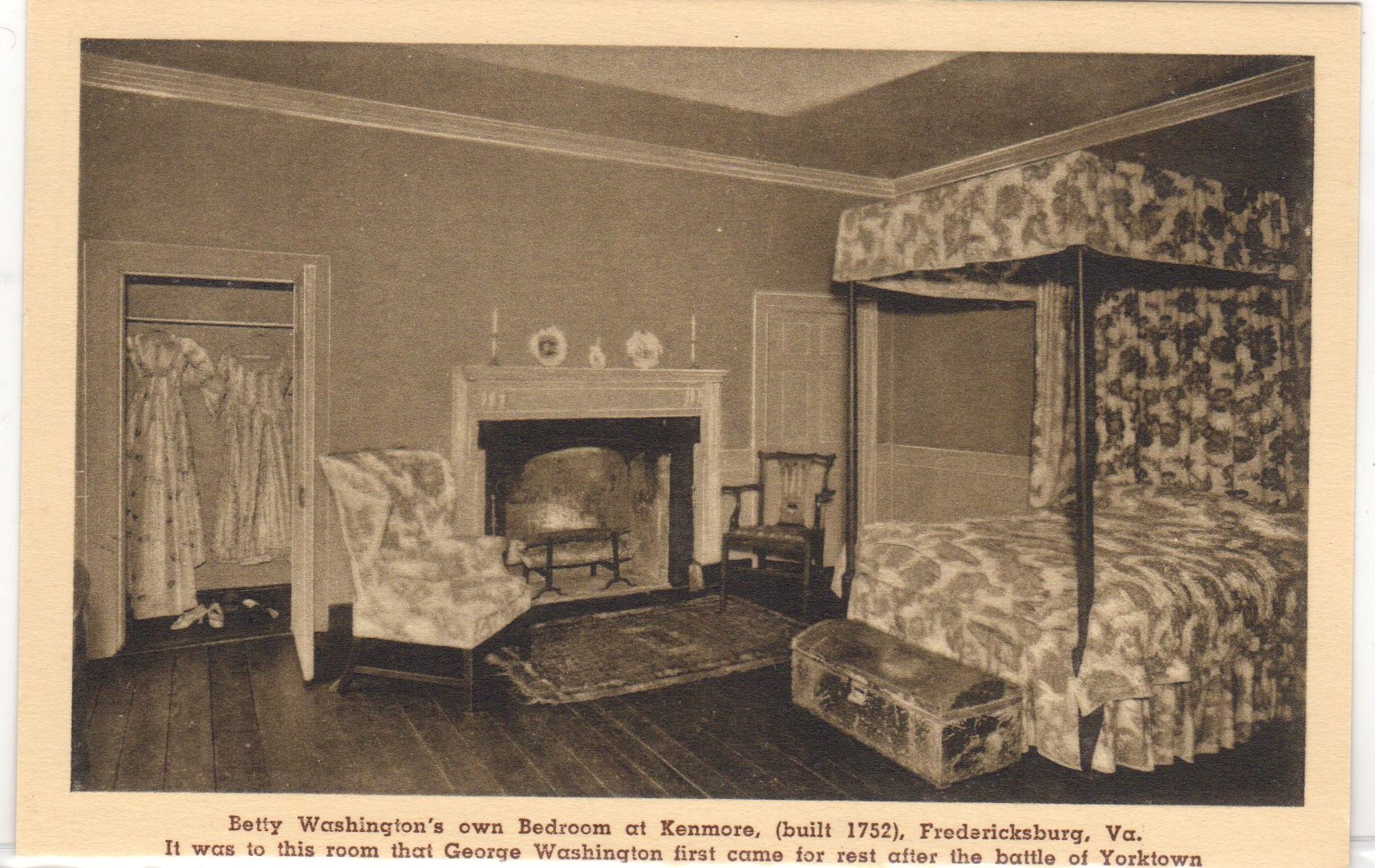
“Betty’s bedroom”/SE room/2nd floor
Again, during the Lewis occupation in the 18th century, individual bedrooms were not common, except for the head of the family. Not many of the objects in the postcard are still in our collection, except for the bed, which is now in the chamber downstairs, and the William Walker, Jr. armchair, which is currently off display, but we do have another one in the dining room.
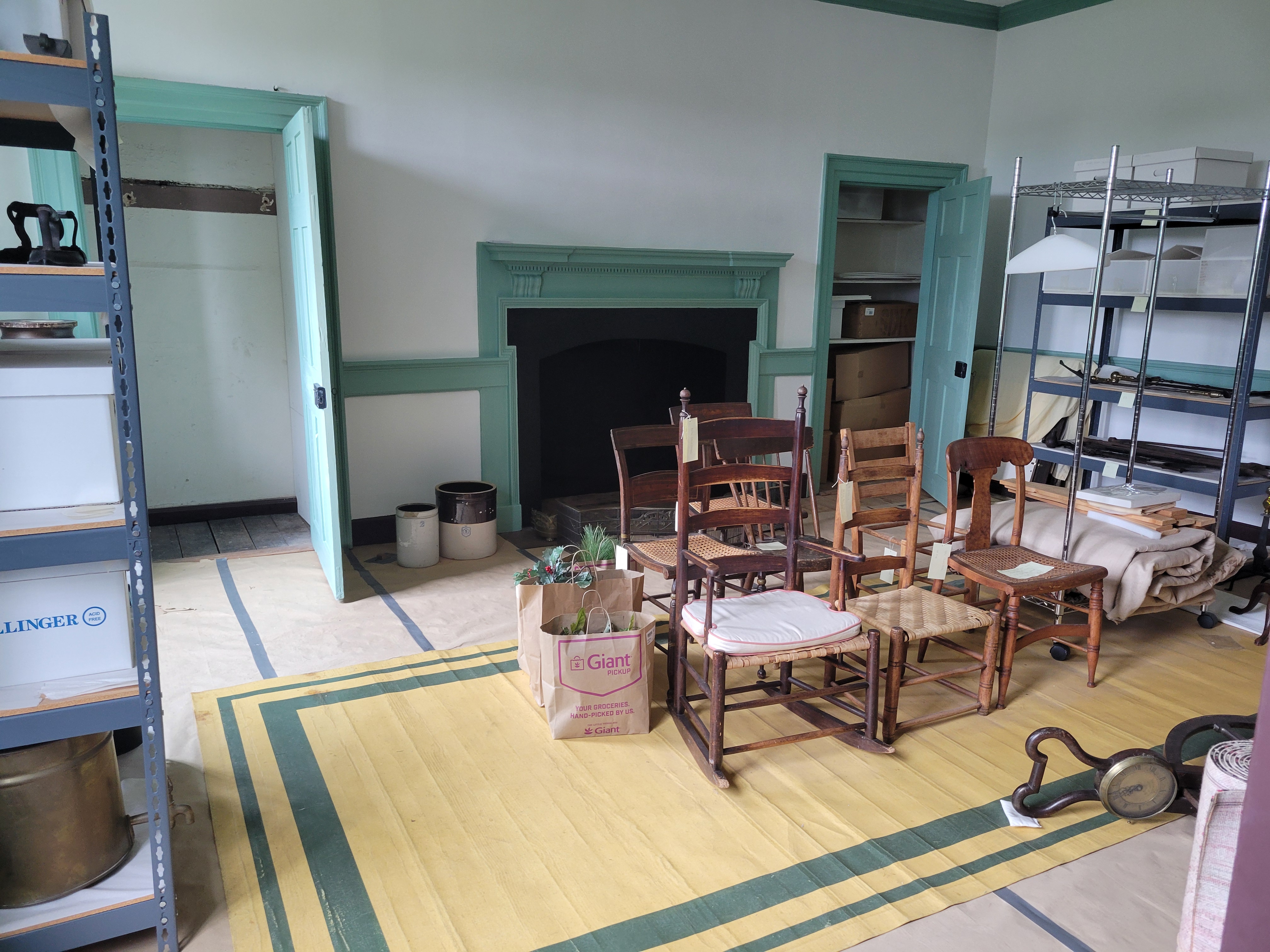
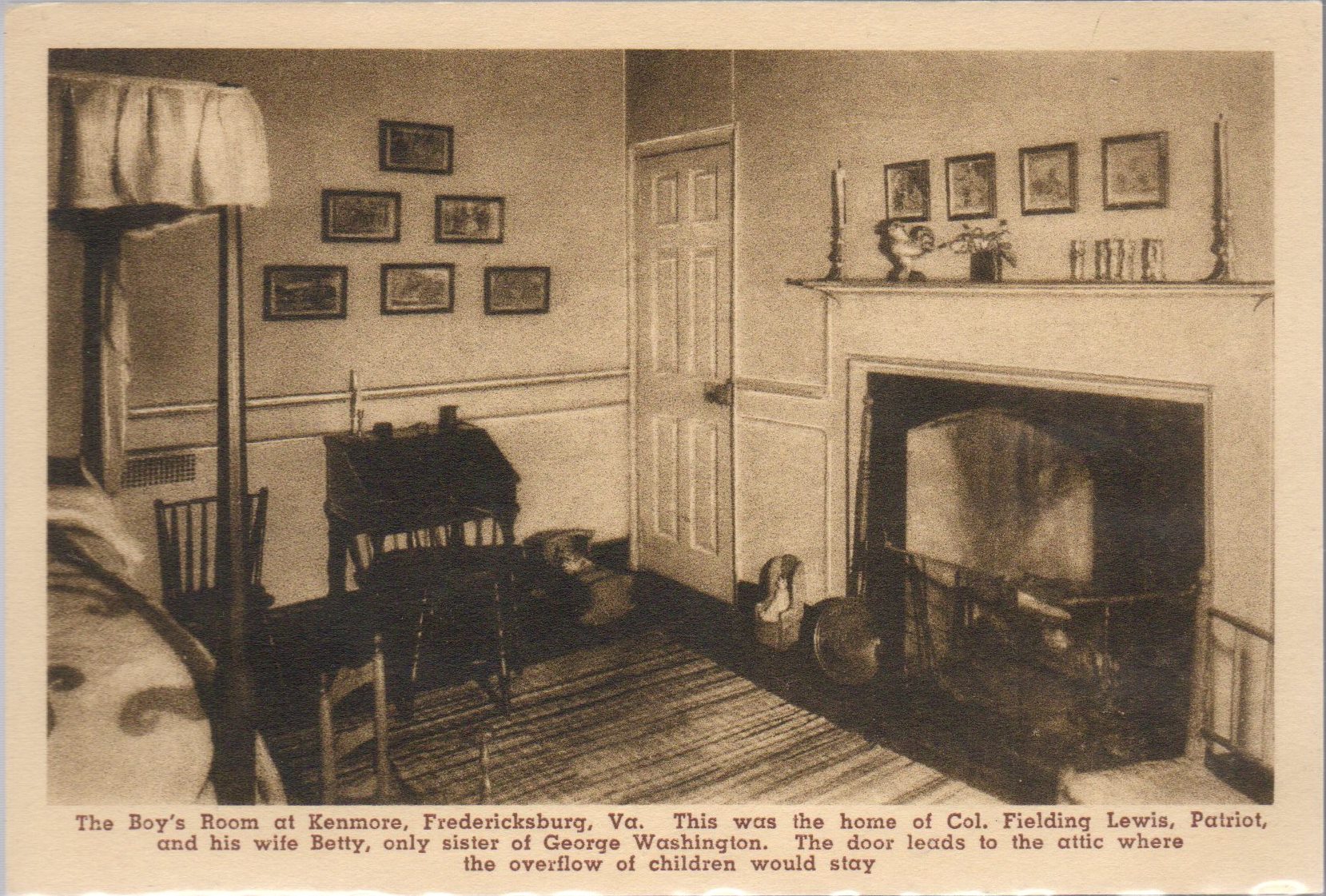
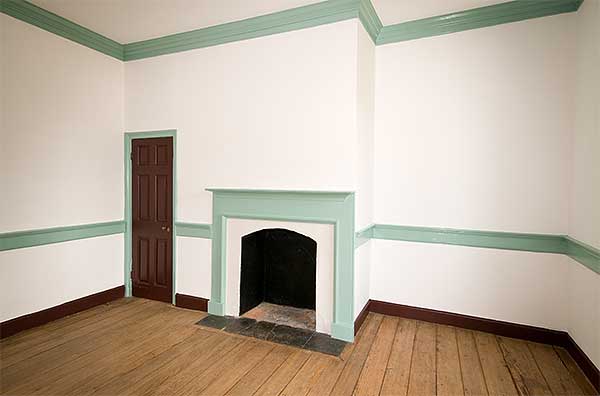
“Boy’s Room”/SW room/2nd floor
The last room upstairs is smaller than the other rooms and has access to the attic. The ladies used this as the boys’ room, but as we discussed, with the other rooms, it is unlikely that this was accurate. We do still have many of the pieces’ pictures, but the only one currently on display is the slant-top desk in the Visitors Center.
Heather Baldus
Collections Manager
 Lives & Legacies